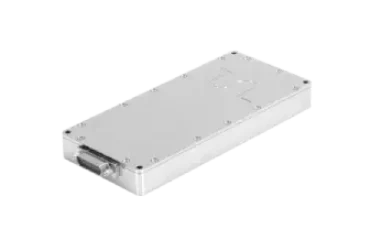
CRPA (Controlled Reception Pattern Antenna) is an active antenna array which utilizes sophisticated signal processing techniques to create a directional reception pattern in order to nullify or attenuate interfering (such as those due to multipath and similar effects) or malicious (such as those from jammers or spoofers) signals.
The main aim of a Controlled Reception Pattern Antenna is to cope with the following issues (due to natural causes as well as probable attacks):
- Multipath: Arrival of the indirect signals that are reflected or diffracted by nearby natural or human-made objects, which lead to inaccurate measurements and erroneous calculations
- Jamming: Transmission of high-power radio signals by a hostile entity at a particular frequency to disrupt or block the original signals
- Spoofing: Transmission of misleading signals by a hostile entity to deceive the receiver causing misinterpretations
CRPAs prevent these issues by means of adaptive beamforming and null steering techniques, where the antenna pattern is dynamically constructed to receive from the desired directions and suppress the unwanted ones. In other words, CRPA antenna can be considered as a system applying spatial filtering which differentiates the legitimate and the counterfeit signals.
CRPA Operation Principle
CRPA consists of an array of multiple antenna elements (typically arranged in circular form), which are connected to a processor that applies beamforming and null steering techniques. The processor is usually selected as an FPGA (field programmable gate array) or a DSP (digital signal processing) chip due to high speed, low cost, low power and low size requirements.
In case an undesired interfering signal attempts to overpower the original desired signals, the CRPA detects the direction of the interferer first. Then, it creates a null in the relevant direction or steers its beam to lower the reception from that direction. Afterwards, it maintains the nulling / steering to keep lock on the original desired signal.
An ideal use case for the CRPA antennas is nothing but the anti-jam GNSS applications, where natural interference due to multipath, jamming and spoofing is quite common. Since the GNSS signals are usually very low power (even below the noise floor), it is relatively simple to apply jamming. Moroever, the publicly available interface specifications for most GNSS systems (especially GPS) facilitate not only the receiver design but also the engineering of sophisticated spoofing devices and platforms. For these reasons, the most frequent application area of the CRPA antennas is the anti-jam GNSS systems.
As long as the number of array elements increase, CRPA gains capability to nullify its beam along more directions. More specifically, it is possible to achieve nullification simultaneously in N–1 different directions by means of N array elements. Certainly, this constitutes a trade-off between performance and SWaP-C (size, weight, power and cost) factors. For applications with SWaP-C constraints, compact arrays are often preferred, whereas distributed arrays offer superior suppression at the expense of increased complexity.
Key considerations in CRPA design include the antenna array configuration, mutual coupling effects, efficiency of the null-steering algorithms (and the resultant null depth), simultaneous independent nulling capability, response time, compliance to the relevant standards in addition to SWaP-C requirements.
Mutual coupling between antenna elements is quite critical since it directly impacts the radiation pattern control capability. Mutual coupling deteriorates the antenna pattern, degrades the impedance matching characteristics and radiation efficiency due to undesired shifts in the resonance frequencies. Optimization of the CRPA array design (simultaneous minimization of mutual coupling and the array size though being contradictory) is eventually a technical challenge.
TUALCOM’s CRPA Products
TUALCOM’s CRPAs have 4 and 8 antenna array options with operation in all satellite constellation frequencies making them suitable for all members of the TUALCOM Anti Jam GNSS Systems product family. They can be designed conformally and with different radome options for various kinds of platforms to fit in various shapes depending on the application. You can click the link for Tualcom CRPA products.